
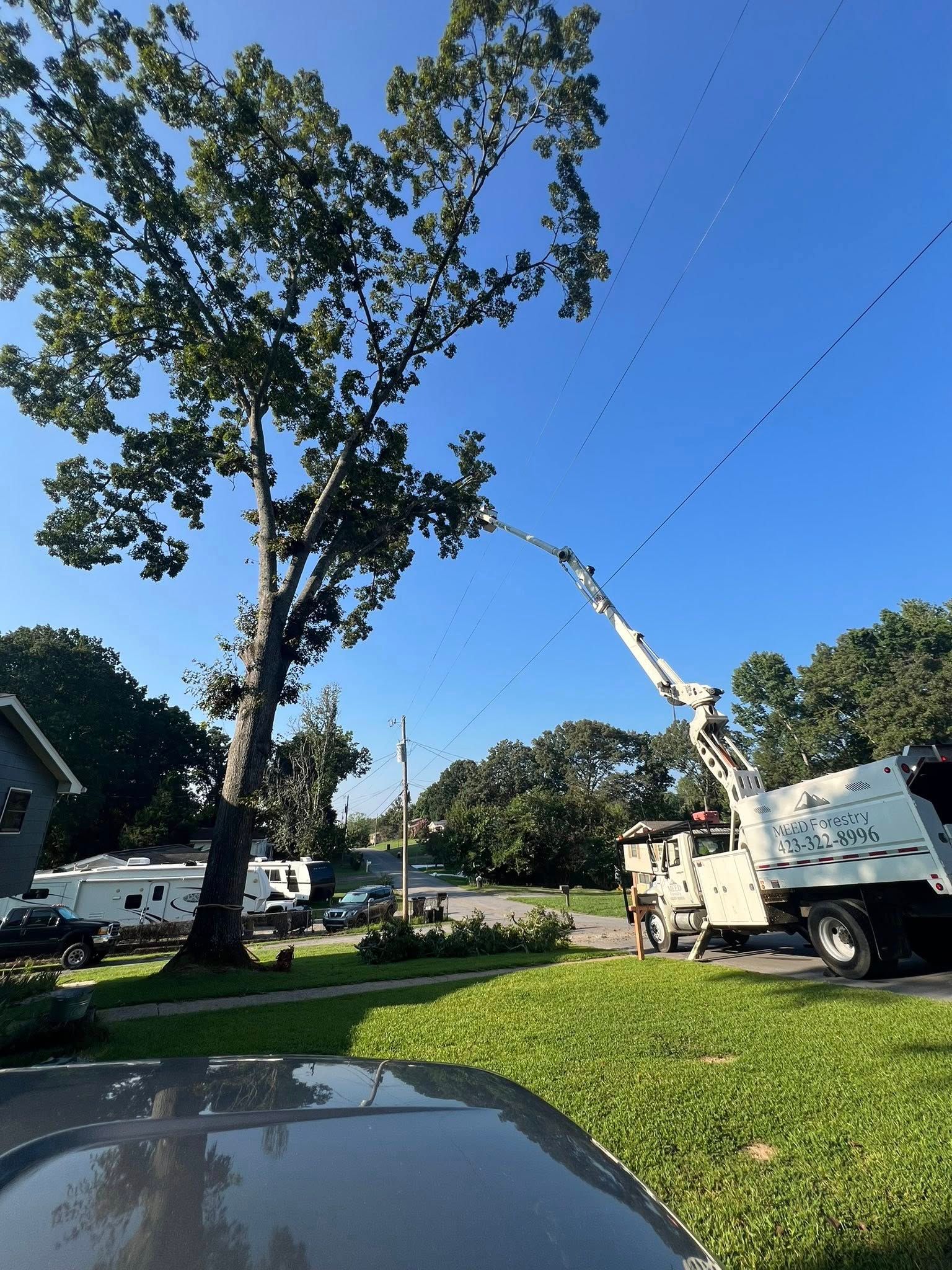
Keep Trees Healthy and Clear of Structures
Tree Trimming in Chattanooga and surrounding areas for overhanging limbs scraping roofs and damaged branches threatening power lines
Meed Forestry offers tree trimming in Chattanooga, Signal Mountain, Fort Oglethorpe and surrounding areas for property owners dealing with limbs that hang over roofs, driveways, or power lines, and branches damaged by storms or disease. When a maple branch scrapes your shingles every time the wind picks up or a dead limb dangles above your walkway, the risk of damage or injury grows with each storm. You need selective cutting that removes problem limbs while preserving the health and shape of the tree.
This service removes damaged, diseased, or overgrown branches using pruning saws, pole saws, and chainsaws depending on the height and size of the limbs. Cuts are made at the branch collar to promote proper healing and prevent decay from entering the trunk. Trimming improves air circulation through the canopy, reduces weight on weak limbs, and clears space around structures and utility lines. The work is timed to avoid stress during active growth periods and to reduce sap flow that attracts pests.
If limbs are growing too close to your home or you've noticed cracked branches after a storm, contact Meed Forestry to request a tree trimming consultation and get the work scheduled before the next weather event.
What You'll Notice After Professional Trimming
You'll see open space between the tree and your roof or power lines, and dead or crossing branches will be gone. Meed Forestry removes limbs in sections to avoid tearing bark or leaving stubs that rot. The cuts are clean, angled to shed water, and positioned to encourage healthy regrowth in the right direction.
After trimming, your tree looks balanced rather than lopsided, and the canopy lets more light through to the ground below. The risk of storm damage drops because weak or split limbs have been removed, and your roof or siding no longer takes abrasion from branches during high winds. Routine trimming every few years keeps trees from becoming overgrown and reduces the chance of emergency removals later.
This service does not include stump removal, root pruning, or tree health treatments like fertilization or pest control. It focuses on structural pruning and clearance. If a tree has extensive disease or internal rot, removal may be recommended instead of trimming.
Property owners in the Chattanooga area often ask about timing, how much can be safely removed, and what happens to the wood after trimming is done.
Common Questions About Tree Trimming
What tools are used to trim large trees?
Meed Forestry uses pole saws for lower branches, climbing gear and chainsaws for higher limbs, and bucket trucks when access is difficult. Cuts are made with sharp blades to avoid crushing or tearing the wood.
How much of a tree can be trimmed at once?
You should remove no more than 25 percent of the canopy in a single session to avoid stressing the tree. Heavy trimming weakens the tree's ability to produce energy and recover from cuts.
When is the best time to trim trees in Trenton?
Late winter before bud break is ideal because the tree is dormant and wound closure begins quickly in spring. Avoid trimming oaks in spring when beetle activity is high, as fresh cuts attract pests that spread disease.
Why does trimming improve tree health?
Removing dead, diseased, or crossing branches stops decay from spreading and allows air and light to reach inner limbs. This reduces fungal growth and encourages stronger, more evenly distributed growth.
How does trimming reduce storm damage?
Trimming removes heavy or weakly attached limbs that are most likely to break in high winds. It also reduces wind resistance by thinning the canopy, so the tree flexes rather than snaps during storms.
If branches are threatening your home or you need clearance from power lines, reach out to Meed Forestry to schedule a trimming consultation and address the problem before it turns into an emergency.