Clear Vegetation Without Burning or Hauling Debris
Forestry Mulching in Chattanooga and surrounding areas for overgrown fence lines, trails, and acreage where erosion control and soil health matter
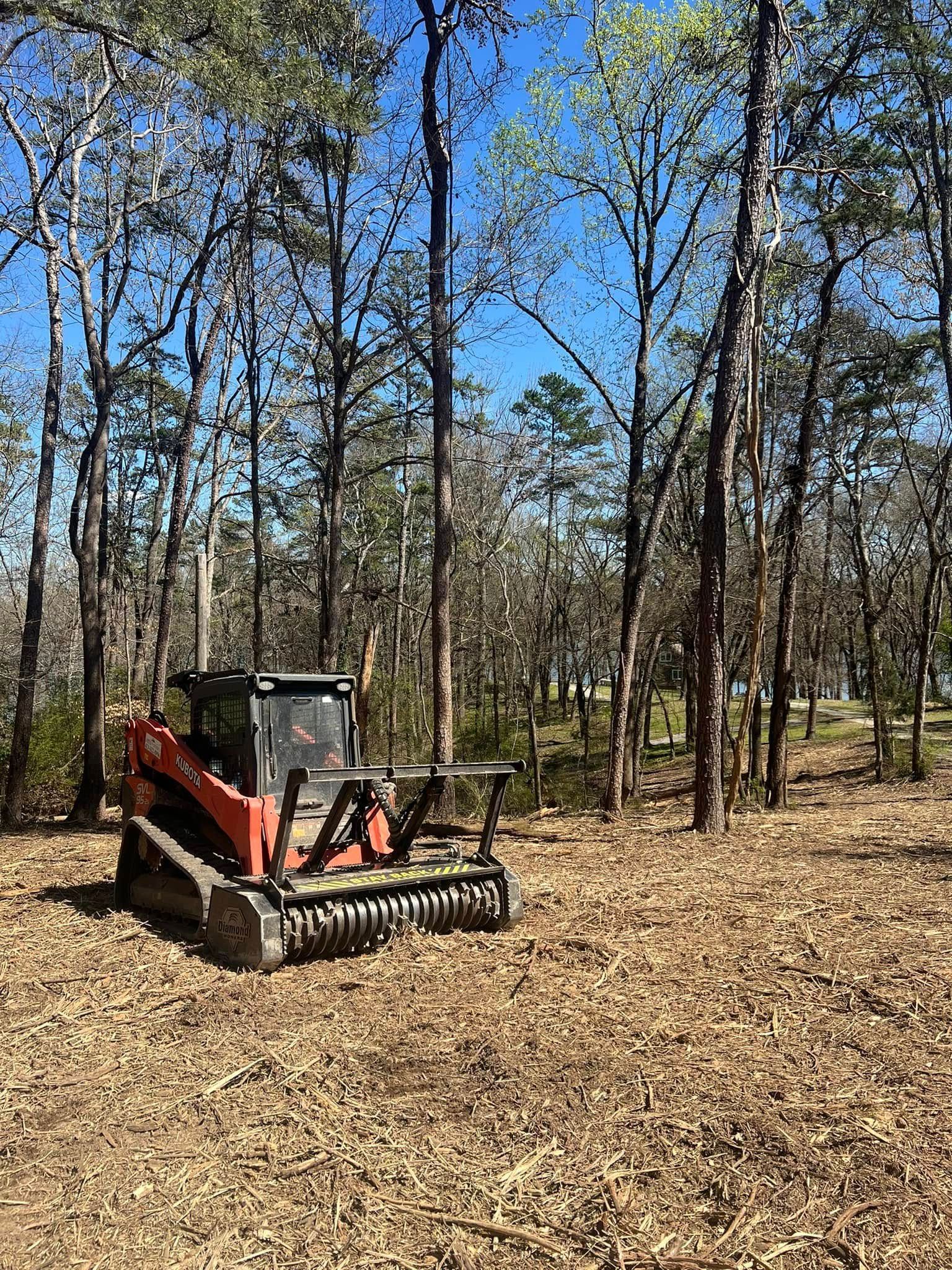
Meed Forestry provides forestry mulching in Chattanooga, Bryant, AL, Flat Rock, AL and surrounding areas for landowners who need to clear brush, saplings, and overgrown vegetation while leaving the ground covered with organic mulch that reduces erosion and protects soil. You may own rural acreage where undergrowth has taken over fence lines, trails, or pasture edges, or you might be managing a property where invasive species such as privet or kudzu are spreading and need to be controlled without disturbing the topsoil. The process uses a tracked mulching machine with a rotating drum and cutting teeth that grinds vegetation into small pieces and distributes the material evenly across the ground.
The service is an alternative to traditional land clearing that requires burning, hauling debris, or using multiple pieces of equipment to cut, pile, and remove vegetation. Forestry mulching handles small trees, brush, vines, and tall grass in a single pass, and the resulting mulch layer stays on the ground to decompose naturally. This method is quieter, faster, and less disruptive than dozer clearing, and it eliminates the need for permits related to open burning. In Chattanooga and neighboring communities, where properties often include wooded edges and uneven terrain, forestry mulching is well-suited for clearing areas without damaging desirable trees or compacting soil with heavy tracked equipment.
Request a forestry mulching estimate to review your property and discuss which areas would benefit from selective vegetation removal.
Controlling Overgrowth While Protecting the Ground
You will notice open sight lines, accessible trails, and reduced undergrowth once the forestry mulching is complete. The mulch layer covers the ground and breaks down over time, adding organic matter to the soil and reducing erosion on slopes or disturbed areas. Fence lines become visible and easier to maintain, and trails are cleared of thorny brush and low-hanging branches that make walking or riding difficult. Pasture edges are opened up for grazing or mowing, and invasive plants are cut back to slow their spread.
Meed Forestry uses forestry mulchers with carbide teeth designed to grind woody vegetation into small chips without tearing up roots or topsoil. The machine operates on tracks that distribute weight and minimize ground disturbance, which makes it suitable for wet or soft ground conditions common in Trenton during certain seasons. Mulching can be selective, meaning the operator clears specific areas or plant types while leaving mature trees, native shrubs, or other features intact. The process is effective for controlling invasive species such as multiflora rose, autumn olive, and honeysuckle, which often dominate fence rows and woodland edges.
The service does not include stump removal, grading, or clearing of vegetation larger than eight inches in diameter, which may require traditional dozer clearing or tree removal. Mulching is most effective on properties with dense undergrowth, brush, and saplings rather than mature timber or hardwood stands. The mulch layer may take several months to decompose, and follow-up mowing or herbicide treatment may be necessary to prevent regrowth of invasive species.
Landowners in the Chattanooga area often ask about the size of vegetation that can be mulched, how the process compares to traditional clearing, and whether mulching prevents regrowth.
Questions About Forestry Mulching and Vegetation Control
What size trees and brush can a forestry mulcher handle?
Most forestry mulchers grind vegetation up to six to eight inches in diameter, including saplings, brush, vines, and tall grass. Larger trees require cutting and removal before mulching.
How does forestry mulching reduce erosion?
The mulch layer covers bare soil, slows water runoff, and allows moisture to soak into the ground, which prevents gullying and soil loss on slopes and disturbed areas.
Will mulching kill invasive plants or prevent regrowth?
Mulching cuts invasive plants to ground level, but it does not kill root systems. Follow-up mowing or herbicide treatment may be needed to prevent regrowth, especially for aggressive species common in Trenton.
Can you mulch around existing trees and fences?
Yes, the operator can selectively clear around desirable trees, fence posts, and other features without damaging them, which preserves property boundaries and mature vegetation.
Is forestry mulching quieter and less disruptive than dozer clearing?
Yes, mulching is quieter, faster, and eliminates the need for burning or hauling debris, which makes it a better option for properties near homes or where noise and smoke are concerns.
Meed Forestry uses forestry mulching for acreage clearing, trail maintenance, and vegetation control on residential and rural properties. Contact the crew to discuss your property and schedule a site visit.