
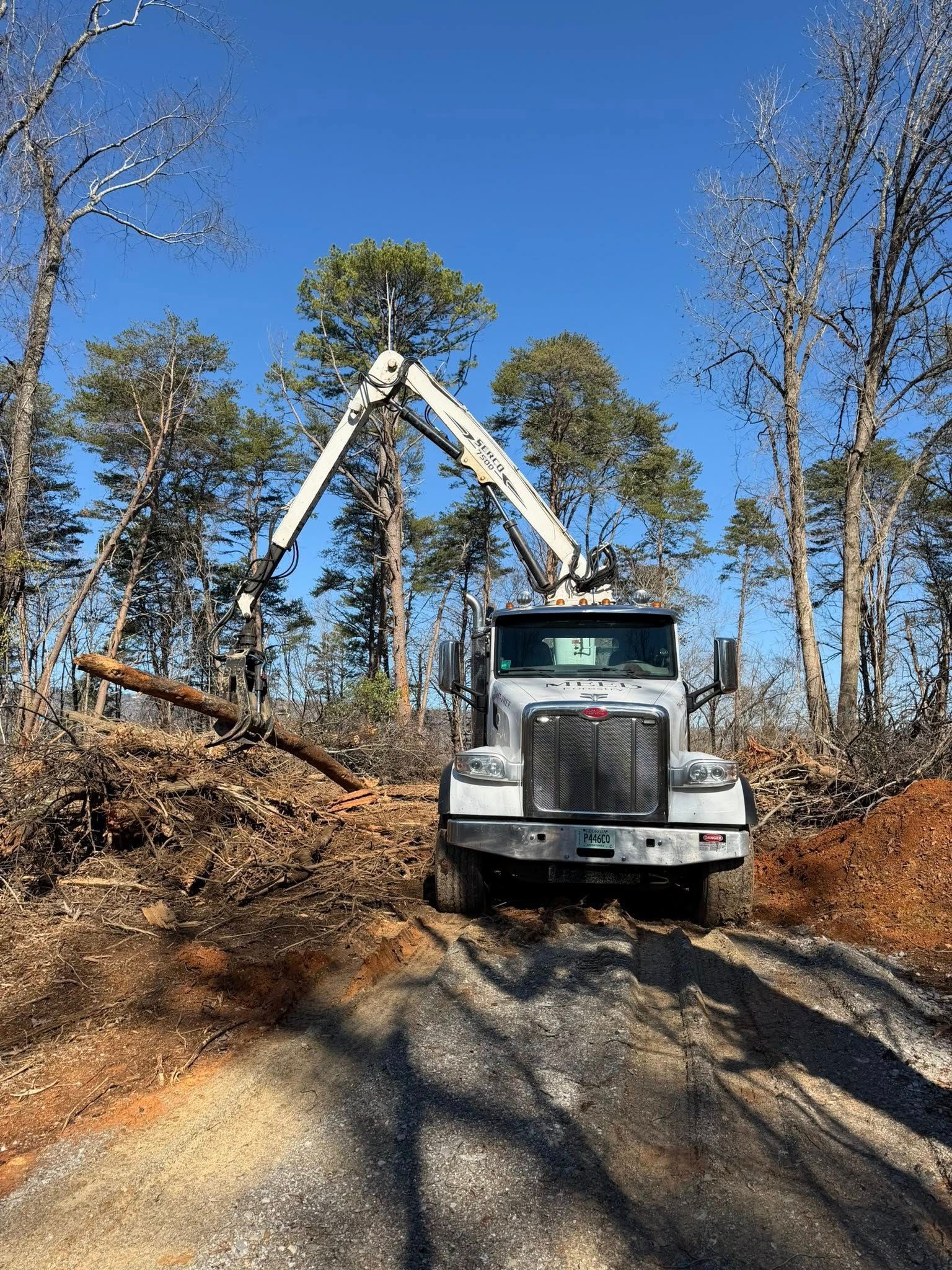
Clear Access and Maintain Utility Corridors
Right of Way Line Clearing in Chattanooga and surrounding areas for utility corridors obstructed by overgrowth and property boundaries blocked by brush
Meed Forestry provides right of way line clearing in Chattanooga and the surrounding Tennessee, Georgia, and Alabama communities for property owners, utility companies, and developers who need vegetation removed from access roads, utility corridors, and property boundaries. When saplings and brush close in on power lines or access roads become impassable due to overgrowth, you lose visibility, access, and compliance with clearance requirements. You need efficient clearing that opens the corridor and keeps it usable without damaging adjacent land.
This service removes trees, brush, and tall vegetation from long linear corridors using forestry mulchers, brush mowers, and chainsaws. The work maintains required clearance around power lines, gas pipelines, and communication cables, and restores access along roads, trails, and property boundaries. Clearing supports infrastructure maintenance, reduces fire risk, and keeps access routes open for emergency vehicles and service crews. The process is scalable for short residential boundaries or multi-mile utility corridors.
If your access road is overgrown or you need a utility corridor cleared for inspection or compliance, contact Meed Forestry to schedule right of way clearing services and discuss the scope and timeline for your project.
What Changes After Right of Way Clearing
You'll see a clear corridor with vegetation cut back to the specified width, and sightlines restored along roads and boundaries. Meed Forestry cuts vegetation at ground level or mulches it into place depending on terrain and future maintenance plans. For utility corridors, clearance zones are maintained to meet safety and regulatory standards, and access routes are reopened for vehicles and equipment.
After clearing, your property or infrastructure is easier to inspect, maintain, and navigate. Recurring vegetation interference drops because fast-growing species are removed and regrowth is slowed by mulching or follow-up treatments. The work also reduces wildfire risk by eliminating dense brush that carries flames along corridors during dry conditions.
This service does not include grading, paving, or stump removal unless specified. It focuses on vegetation removal and maintaining clearance. If invasive species are present, additional treatments or scheduled maintenance may be necessary to prevent rapid regrowth.
Property owners and project managers in the Chattanooga area often ask about equipment, clearance widths, and how long the corridor stays open after the initial clearing.
Questions About Clearing Linear Corridors
What equipment is used for right of way clearing?
Meed Forestry uses forestry mulchers for wide corridors with dense vegetation, brush mowers for lighter growth, and chainsaws for selective tree removal. The equipment is chosen based on terrain, width, and vegetation density.
How wide should a utility corridor be cleared?
Clearance width depends on the type of utility and local regulations. Power line corridors typically require 20 to 50 feet of clearance on either side of the line, while access roads may need 12 to 15 feet of usable width.
When is the best time to clear right of way corridors in Trenton?
Late fall through early spring is ideal because vegetation is dormant, ground conditions support heavy equipment, and regrowth is slower. Summer clearing is possible but requires more frequent follow-up to control fast-growing species.
Why does clearing reduce vegetation interference long-term?
Clearing removes woody plants and deep-rooted species that grow quickly and obstruct access or lines. Mulching the debris suppresses some regrowth, and follow-up maintenance prevents new growth from reestablishing before it becomes a problem again.
How does right of way clearing support infrastructure maintenance?
Cleared corridors allow crews to access lines, pipelines, and equipment without cutting through brush each time. It also improves visibility for inspections and reduces the risk of vegetation-related outages or damage.
If your utility corridor is overgrown or you need access restored along a property boundary, reach out to Meed Forestry to schedule clearing services and get the project planned and completed efficiently.